Focus
Identify targeted case studies based on existing scientific knowledge and the issues specific to each territory.
A non-profit organisationA line to follow
Scientific and human expeditions exploring the links between biodiversity, societies and landscapes - and sharing them with as many people as possible.
From Borneo to Bali, combining sailing and overland exploration
Photograph: Lo2asinamura · CC BY-SA 4.0 · Cropped
Our mission
La Ligne du Vivant turns scientific field exploration into cinematic, artistic and educational narratives. Our aim is to make the links between species, ecosystems and human societies accessible.
Our social purpose
Scientific knowledge documents changes in biodiversity and their consequences. Yet the links between a species, an ecosystem, a human activity and the benefits we derive from the living world can remain difficult to perceive.
We want to make them tangible through documented situations, encounters and sensitive storytelling.
Our approach
Identify targeted case studies based on existing scientific knowledge and the issues specific to each territory.
Bring together field observations and testimonies from local residents, researchers and conservation practitioners.
Turn this knowledge and experience into documentaries, illustrated narratives, educational resources, accessible summaries, talks and discussion screenings.
Our approach does not replace scientific assessments: it extends their reach through fieldwork, imagery, creation and encounter. It will take shape in 2027 with The Frontier of Life, our first expedition.
The Frontier of Life - Wallace Expedition 001
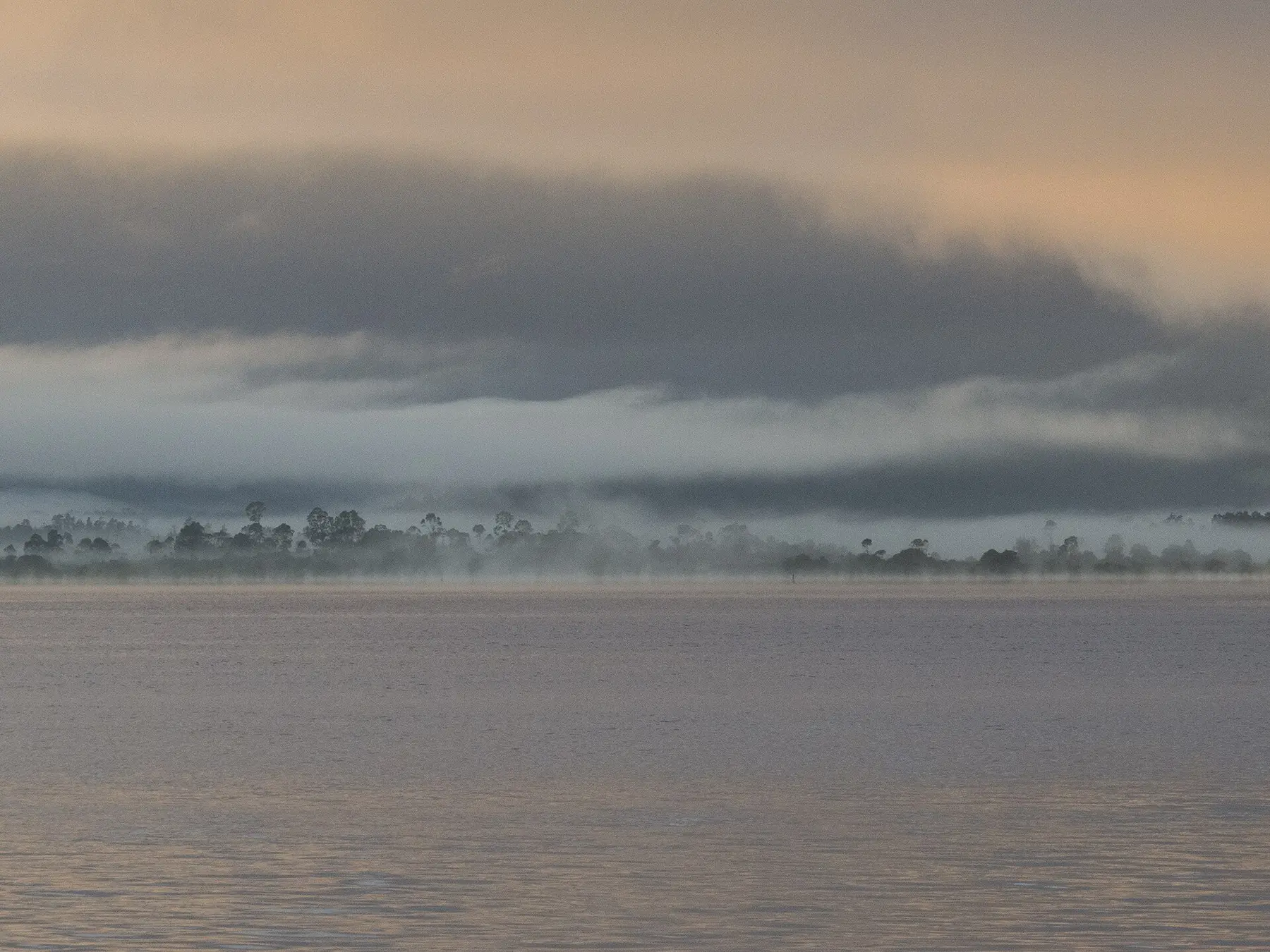
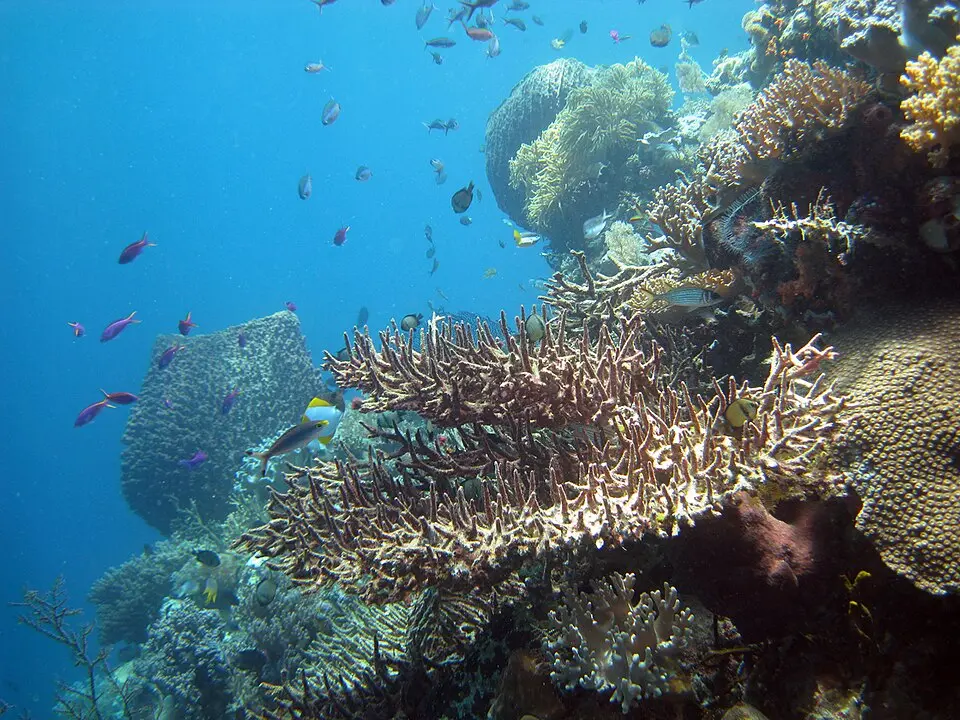
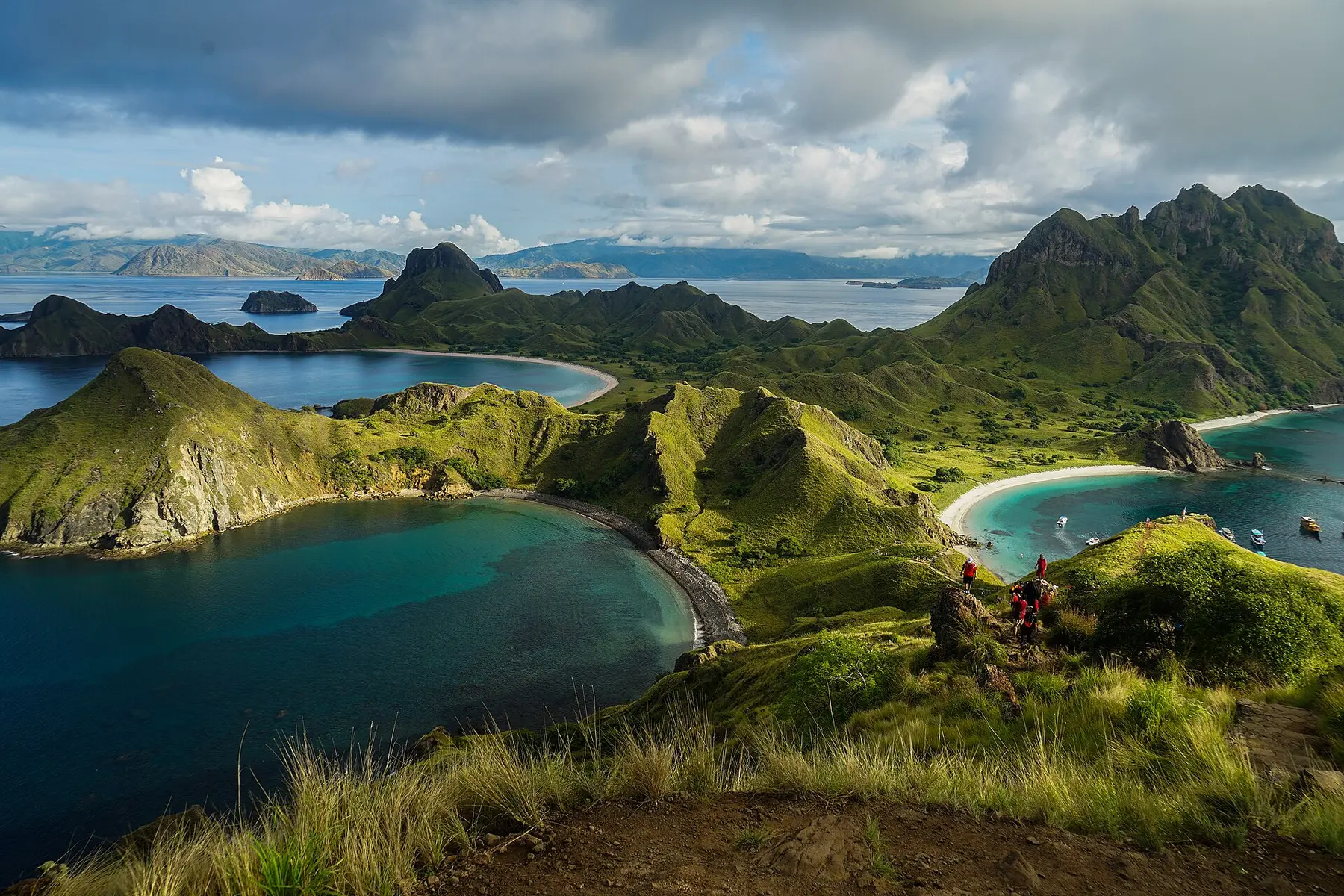
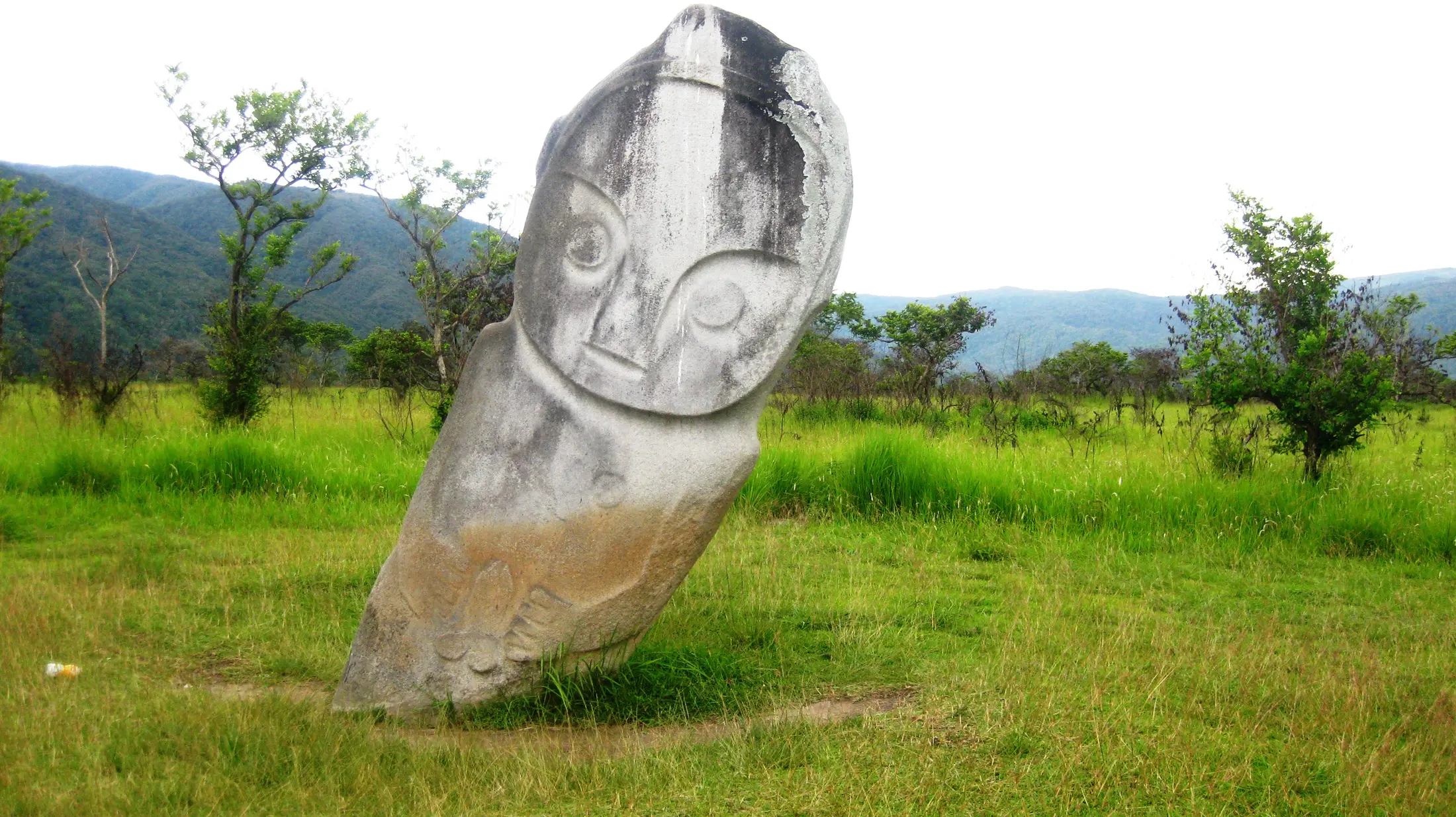
From Borneo to Bali, these four landscapes introduce the main stages of our first expedition. Swipe, use the arrows or select a stage to follow our route.
Travel through the landscapes of Kalimantan, between ecological continuities and human pressures.
Photographs: Hendrojkson · CC BY-SA 4.0 · Arif Rudiyanto · CC BY-SA 4.0 · Craig D · CC BY-SA 2.0 · YUS JULIADI · CC BY-SA 4.0
External perspectives
La Ligne du Vivant and its first expedition have already attracted the interest of several local media outlets.


Wallace Expedition · Indonesia · 2027
A scientific, documentary and artistic expedition led by La Ligne du Vivant. The main two-month route will connect Borneo, Sulawesi and the Lesser Sunda Islands as far as Bali, combining sailing with overland exploration. In the full scenario, an extension to Papua New Guinea will take the inquiry towards species assemblages characteristic of the Australasian region.
In the field
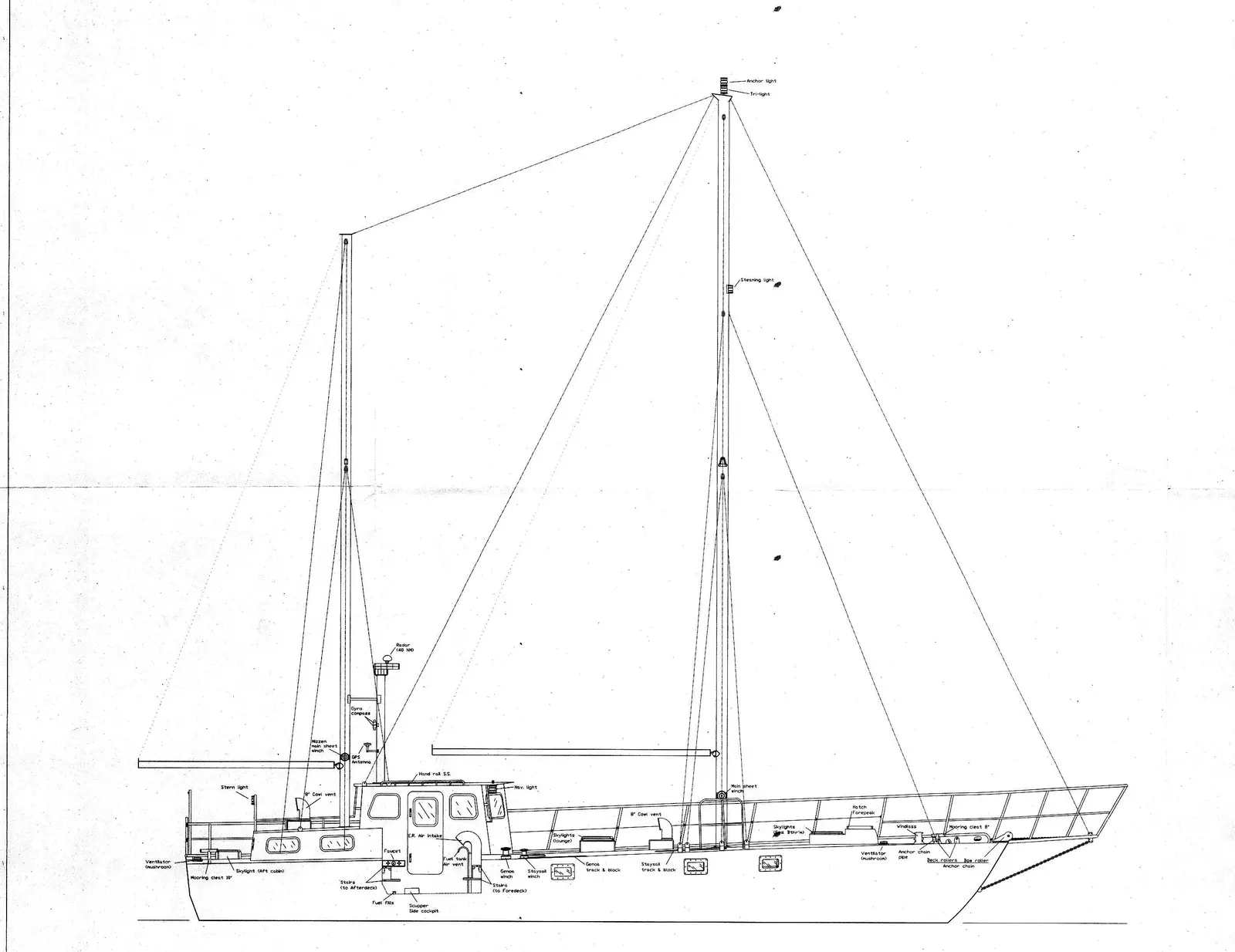
Aboard Zeehaen, a 52-foot steel sailing vessel, and then overland, we will bring together field observations, scientific knowledge and accounts from local residents, researchers and conservation practitioners. Forest and river environments will gradually give way to coastal and marine ecosystems.
An extension to Papua New Guinea is being considered from 1 to 15 July, subject to permits, logistics and funding.
Understanding the Wallace Line
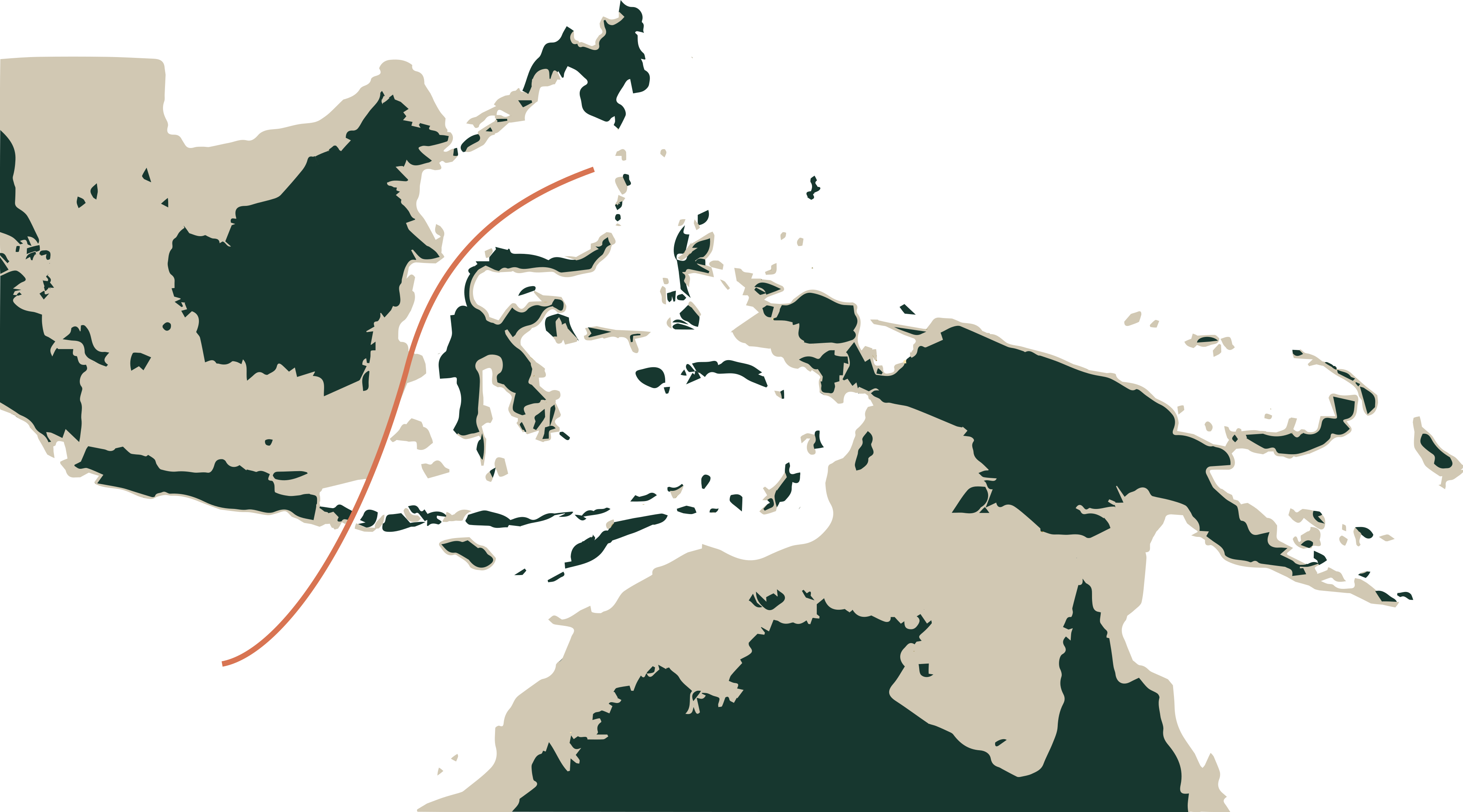
Illustration adapted from Roberts et al. (2020), Nature Communications.
The Wallace Line is a biogeographical boundary described in the 19th century by the naturalist Alfred Russel Wallace. It runs between Borneo and Sulawesi, and between Bali and Lombok.
It is neither a wall nor a political border. Islands that lie close together on either side host strikingly different species assemblages: stronger Asian affinities to the west and Australasian affinities to the east. Deep straits have long limited the movement of species, even when sea levels were lower.
Borneo, Sulawesi, Wakatobi and the Lesser Sunda Islands form a transect spanning forests, rivers, coasts and reefs. This route allows us to ask the same question across contrasting biogeographical, ecological and human contexts.
Why follow it? Because it provides a remarkable natural setting for comparing how species with similar ecological roles now respond to the same human and climate pressures.
Our method
We are not seeking to produce an exhaustive inventory of biodiversity. Case studies will be selected from existing scientific research, then refined with local researchers and partners according to the sites, permits and field conditions.
We will look, for example, at the links between certain ecological functions and tangible contributions of biodiversity to people across the region: resources and income from coastal fisheries, water capture and regulation by karst massifs, non-timber forest resources, and coastal protection provided by reefs and mangroves. Our aim is to make these connections visible without reducing them to a simple relationship or a single indicator.
Identify comparable situations through existing research and ongoing discussions with researchers, NGOs and conservation practitioners. These avenues are still being developed and do not yet constitute confirmed partnerships.
Document the species and environments concerned, their ecological context and the human and climate pressures observable at each site.
Gather accounts from residents, researchers and conservation practitioners to understand uses, changes and local responses.
Bring together literature, observations and accounts while making limitations and uncertainties explicit, in order to build narratives that remain faithful to the complexity of the field.
The journey
The route alternates between sailing and overland transects. At each stage, ecological observations are considered alongside documented pressures and local conservation initiatives.
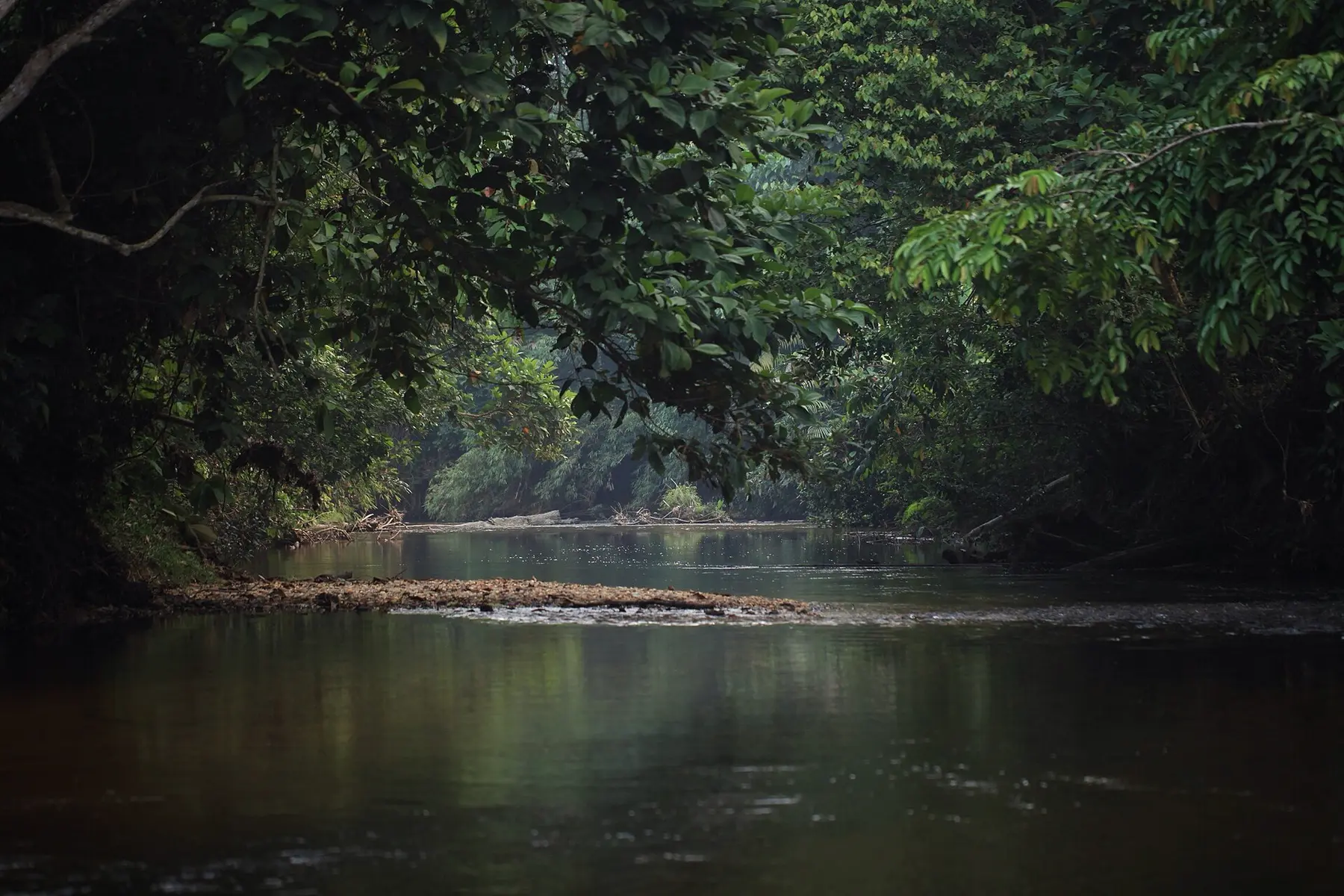
The journey begins in Borneo by examining the continuities between forests, rivers, mangroves and coasts. Among the case studies under consideration, the saltwater crocodile (Crocodylus porosus) could shed light on the role of a large predator at these interfaces and on forms of coexistence with riverside communities. Discussions are under way with a local non-profit project being established around crocodilians and reptiles.
After the sea crossing, an overland transect of more than 1,200 kilometres will cross Sulawesi, including Lore Lindu. In the southeast, the team aims to document the Tangkelemboke, Matarombeo and Mekongga massifs, where several scientific and conservation initiatives are improving knowledge of these environments and exploring potential new protected areas. The sites, local contacts and arrangements for this stage remain to be confirmed.
At Wakatobi, the focus will broaden to the connections between land, coast and marine environments. Nearly thirty years of scientific work at Hoga provide a valuable basis for documenting reefs, seagrass meadows and the resources they provide to local communities. The sites, local contacts and arrangements for this stage remain to be confirmed.
The final voyage will follow the Lesser Sunda Islands to Bali. Island, coastal and marine environments will extend the comparison while the team begins to bring together the observations, testimonies and images gathered along the route.
The maritime base
Built in steel in Tasmania in 1982, this 15.60-metre ketch was designed for expeditions: robust, self-sufficient and capable of sailing far from shore-based infrastructure. Crewed by two skippers, it will carry the team and its scientific, audiovisual and artistic equipment between the islands, providing a genuine offshore base for living and working. Its owner, Xavier, is currently upgrading the vessel in preparation for the expedition.
Projected budget
The streamlined scenario covers the Indonesian route with adjusted outputs. The full scenario expands the programme and its outputs, and includes the Papua New Guinea option.
Summary as of 17 October 2026. These figures are projections and the programme will be adjusted to the funding secured. Based on a conservative estimate, approximately 75% of the full budget is allocated to the project’s environmental, scientific and outreach components.
Biodiversity, ecological functions and pressures along the transect.
Researchers, communities, managers and conservation practitioners.
Film, illustrated narrative, talks and educational resources.
French non-profit organisation · founded in 2026
A lasting framework for expeditions, storytelling and bridges between science, fieldwork and society.
Our line is not a boundary.
The “line” is less a boundary than a guiding thread: one that connects species, ecosystems and societies, as well as researchers, field practitioners and audiences.
Each expedition becomes a chapter: a field investigation, a human adventure and a range of formats for sharing knowledge differently.
Our beginnings
La Ligne du Vivant grew from a personal observation: knowledge about biodiversity loss is advancing, yet it often remains disconnected from the stories, landscapes and people it concerns.
A conservation ecology researcher and qualified mountain leader, Pierre-Louis Rey wanted to bring scientific rigour, experience in remote environments and engagement with diverse audiences together within a single organisation. The non-profit gives this approach a collective, lasting framework open to other disciplines.
The Frontier of Life is its first step into action: going into the field, meeting those who live in, study and protect these ecosystems, then sharing their realities without oversimplifying what connects them.
How we work
We begin with existing scientific knowledge, field observations and local encounters. Film brings documented situations into view, illustration helps convey their complexity, and education makes them accessible to different audiences.
These formats do not replace science: they extend its reach through images, storytelling and emotion.
Why act
The scientific literature converges: biodiversity loss alters how ecosystems function and the benefits they provide to societies. These figures convey the scale of the problem without reducing its complexity.
of the Earth’s land surface has been directly transformed by human activities.
Díaz et al. · Science, 2019 ↗︎of species are estimated to be threatened or to have been driven to extinction since the beginning of the 16th century, according to expert estimates.
Isbell et al. · Frontiers, 2023 ↗︎of surveyed experts believe that biodiversity loss reduces ecosystem functioning and their contributions to society.
Isbell et al. · Frontiers, 2023 ↗︎Conservation goals must aim for a measurable recovery in the state of nature by 2050, beyond merely slowing losses.
Mace et al. · Nature Sustainability, 2018 ↗︎Relationships between species can disappear before the species themselves, disrupting ecological functions and ecosystem services sooner.
Valiente-Banuet et al. · Functional Ecology, 2015 ↗︎Linking species data to their contributions improves spatial predictions of how nature’s contributions to people may change under global change.
Rey et al. · Trends in Ecology & Evolution, 2026 ↗︎Further reading: Cardinale et al.’s synthesis of the effects of biodiversity loss on fundamental ecosystem processes and the services they provide. Nature, 2012 ↗︎
One organisation, one approach and a shared voice.
A Wallace expedition in Indonesia, with a dedicated team and clear schedule.
Support Wallace Expedition 001
In May 2027, a six-person team will travel from Borneo to Sulawesi and the Lesser Sunda Islands to observe, document and share transformations in the living world. Your support can take this expedition from plan to fieldwork.
May-June 2027 · possible extension in July
By sailing vessel and overland
Science, film, art and sailing
Film, illustrated narrative, education, events and summary
What your support makes possible
Every contribution follows the same path: preparing the expedition rigorously, reaching the study sites, documenting what is happening there and making that knowledge accessible.
Coordination, permits, scientific framework, insurance and local partnerships.
Sailing vessel, overland travel, equipment, autonomy and team safety.
Field observations, encounters, filming, sound and artistic creation.
Film, illustrated narrative, screenings, educational talks and shared resources.
Field science · film · illustration · education
By supporting the project, help carry knowledge and emotion to new audiences.
The expedition does not end when the team returns. The observations, footage, drawings and testimonies gathered in the field must become accessible forms designed for different audiences.
This roadmap presents the intended outputs. Their duration, scope, distribution partners and quantified commitments will be defined with the team and partners according to the funding secured.
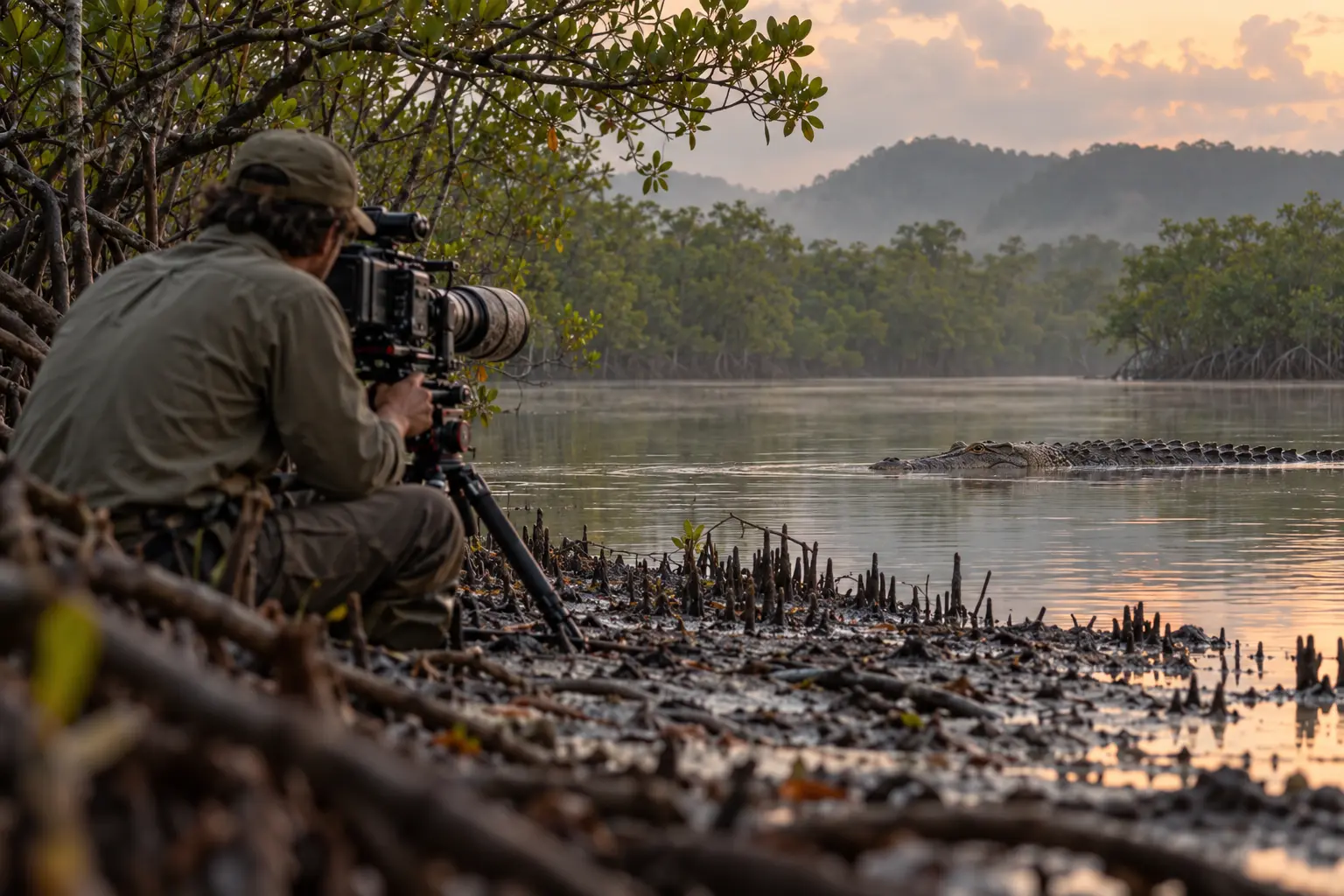
Build a cinematic narrative from documented situations, the journey itself and encounters in the field, highlighting the conservation and societal challenges of today and tomorrow.
AudiencesGeneral audiences, cultural and educational venues, and project partners.
Intended distributionA nationwide cinema release, followed by discussion screenings.
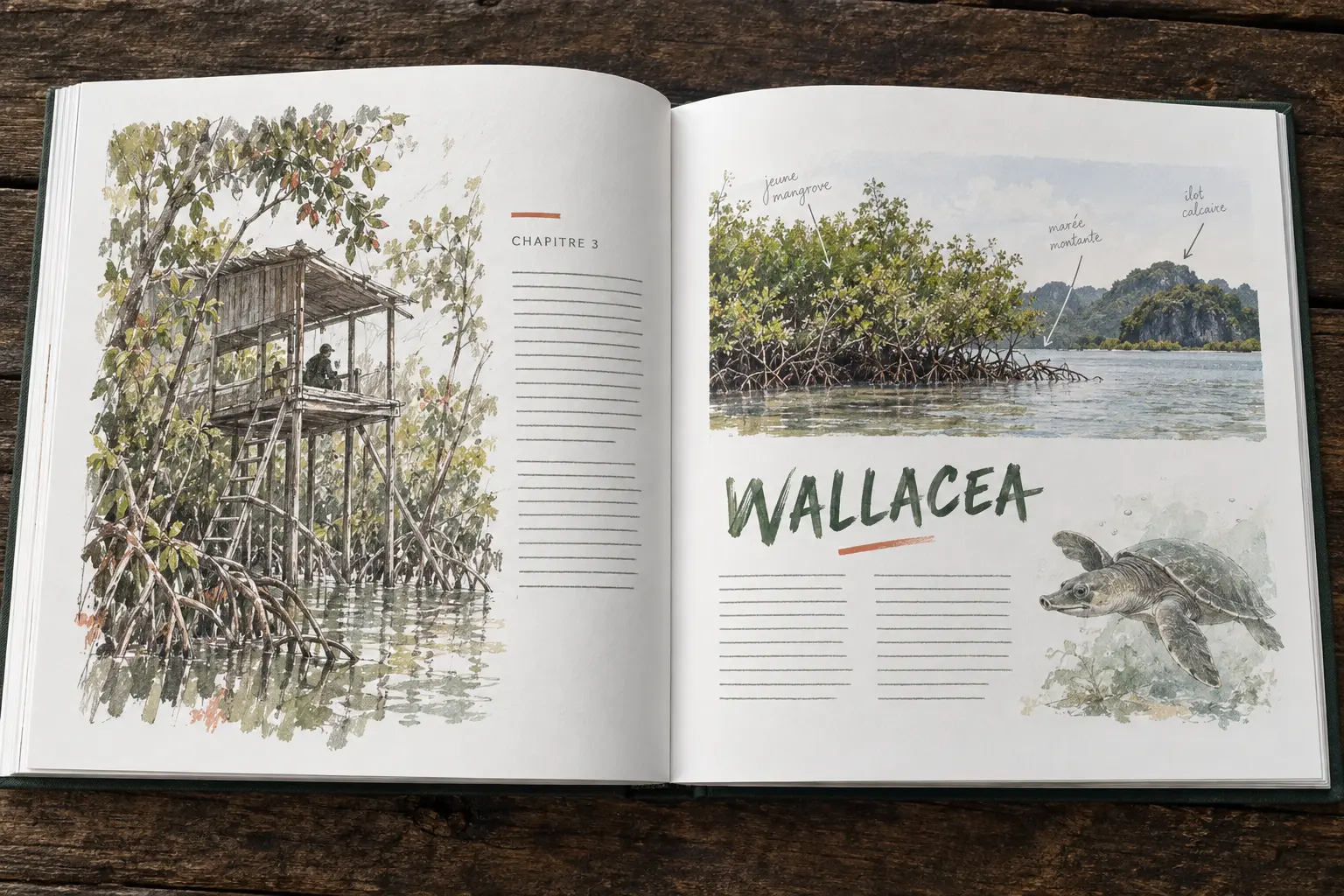
A long-form narrative created by Mélanie Dunand and Pierre-Louis Rey, combining field notes, natural history illustration, science and encounters.
AudiencesFamilies, school audiences, naturalists, scientists and readers curious about the living world.
Intended distributionAn editorial project, bookshops, libraries and educational uses.
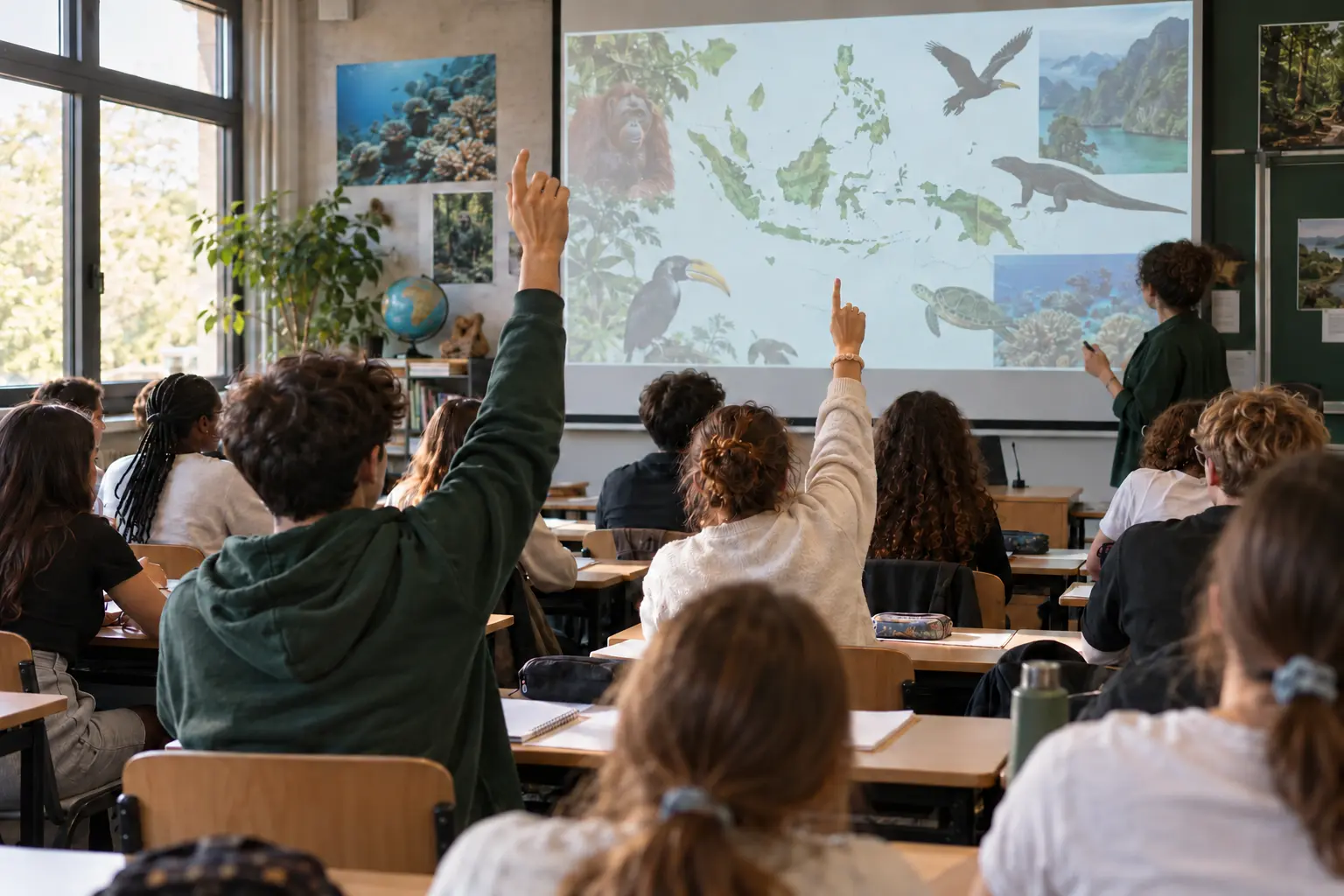
Make tangible the links between biodiversity, ecosystem functioning and societies, and their importance for both today and tomorrow.
AudiencesSecondary schools, higher education and teaching teams.
Intended distributionEducational sessions, partner organisations and digital resources.
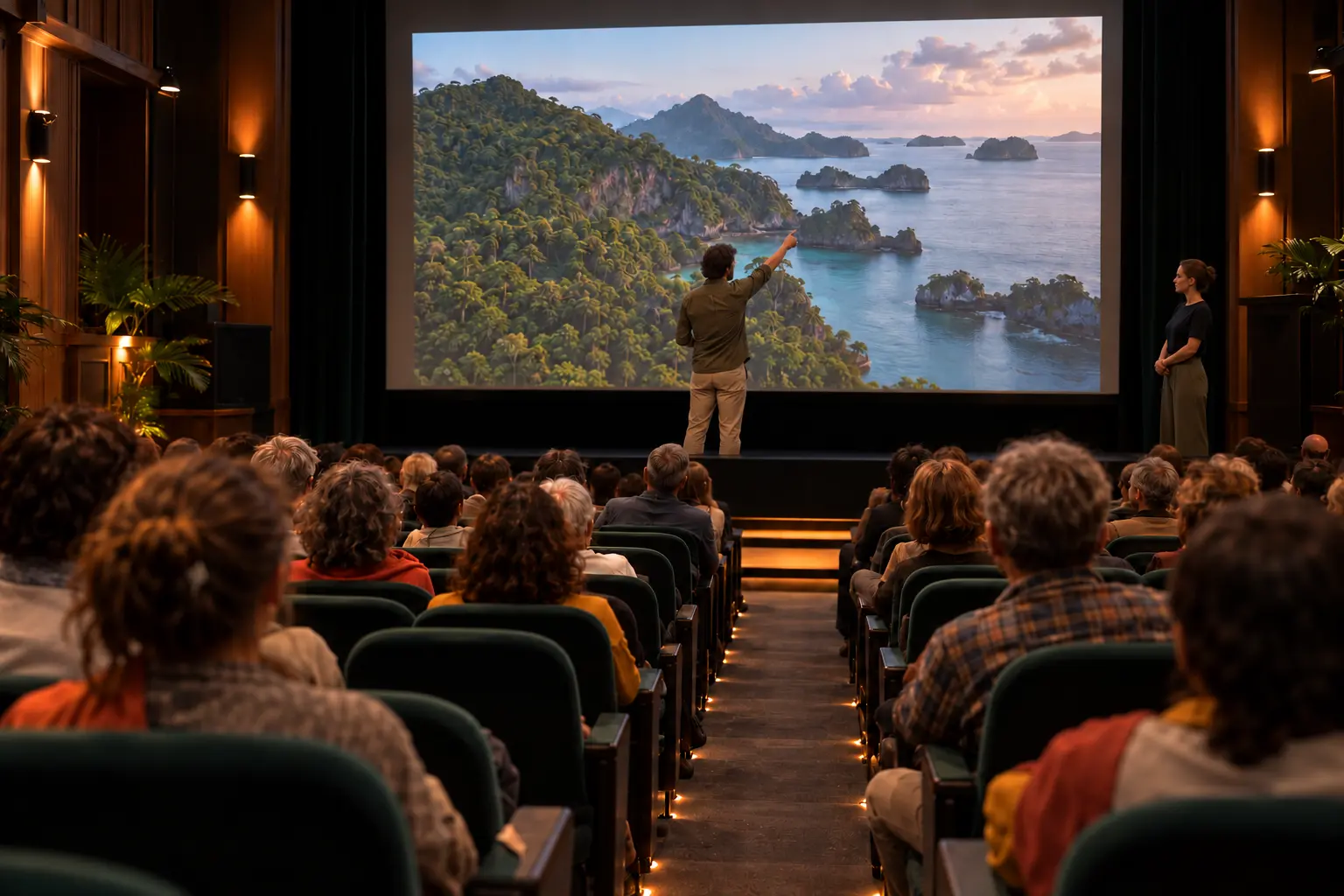
Create spaces for dialogue where science, footage and drawings help audiences discuss the situations observed.
AudiencesCitizens, non-profits, companies, institutions and cultural venues.
Intended distributionVenues, libraries, institutions and partner networks.
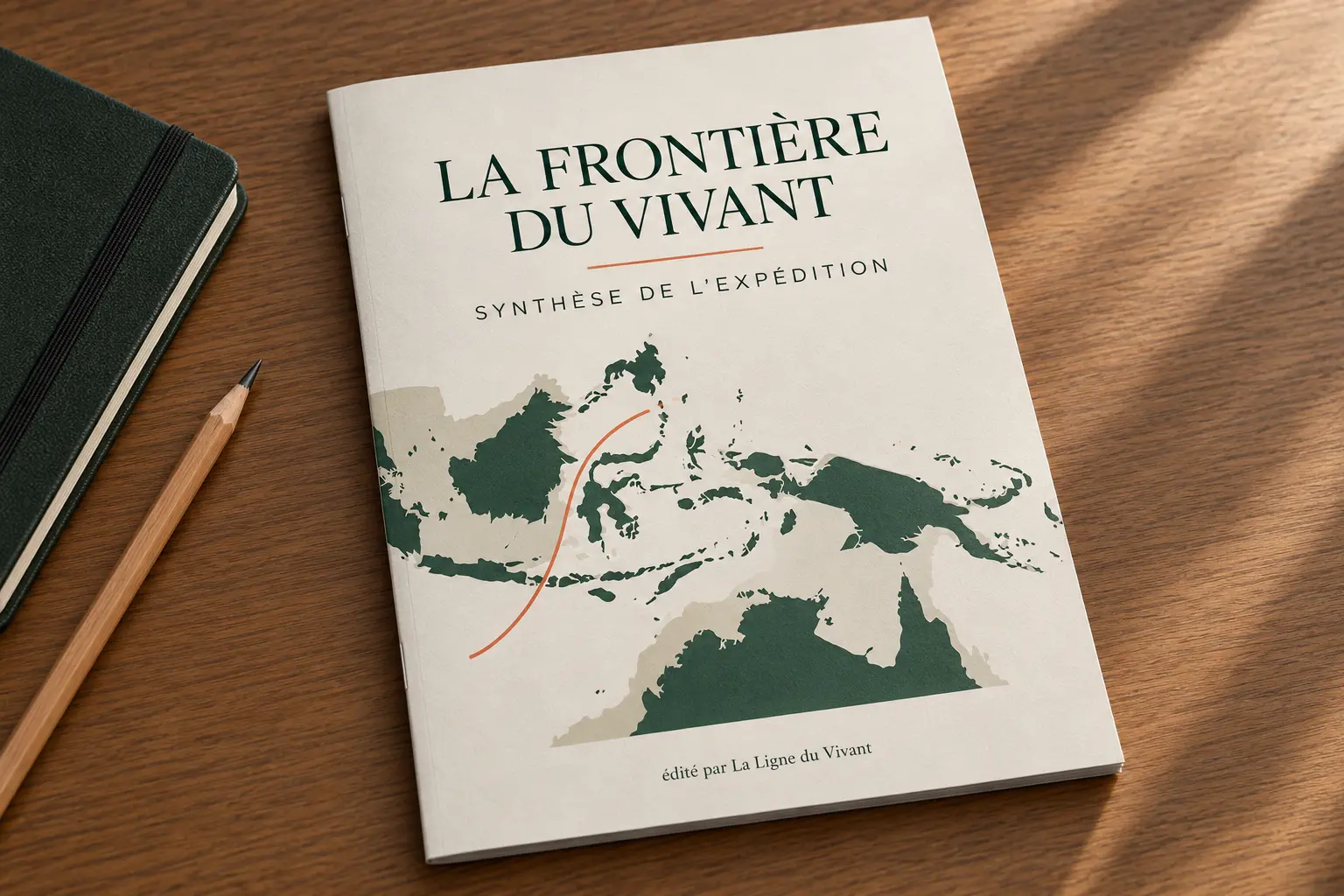
Produce, with the scientific partners and NGOs met during the expedition, a concise and referenced synthesis of the case studies, method, findings and limitations of the inquiry.
AudiencesPartners, funders, scientists, educators and the media.
Intended distributionAvailable to download from the website and shared with partners.
The streamlined scenario secures field collection and the effective launch of all five outputs, in formats adjusted to the resources secured.
The Papua New Guinea extension, enhanced post-production, publishing and printing, subtitling, and a broader educational and events programme depend on full funding and confirmed partnerships.
Choose how to help
Open donations allow everyone to contribute according to their means, either once or monthly, through our secure HelloAsso campaign.
Secure HelloAsso campaign available
Whatever the amount, your donation supports fieldwork, safety, documentary production and the expedition’s public outputs.
Transparency
The streamlined and full scenarios, their breakdown and the estimated carbon footprint are available in the Expedition section.
The campaign is hosted by HelloAsso. Donations are transferred to La Ligne du Vivant; any contribution to the platform’s operating costs remains voluntary.
La Ligne du Vivant is a French non-profit organisation registered under RNA W014005460 and SIREN 109 722 348.
Tax receipts will not be advertised until the organisation’s eligibility has been confirmed by the French authorities.
Team
Science, mountains, film, sailing and art come together to tell the story of The Frontier of Life in all its complexity.
Complementary expertise
The Frontier of Life is organised around clearly defined responsibilities and complementary expertise. Each team member contributes in their field, from scientific and logistical preparation to creating the resulting stories. One shared purpose brings them together: bringing this adventure to life and sharing field knowledge through exploration, imagery and emotion.
Define the case studies, ensure scientific consistency, coordinate partners and oversee the expedition as a whole.
Lead · Pierre-Louis ReyPrepare the shoot, gather footage, sound and testimonies, then lead the documentary’s writing and production.
Leads · Baptiste Deturche & Loris PoussinObserve and draw in the field, then transform the material gathered into an accessible, sensitive and evidence-based illustrated narrative.
Leads · Mélanie Dunand & Pierre-Louis ReyPrepare the crossings, autonomy at sea and the protocols required for the safety of both the team and the project.
Leads · Éloi Devin & Vicky PronierAdapt the outputs and events for school, scientific, non-profit, cultural and partner audiences.
A shared responsibility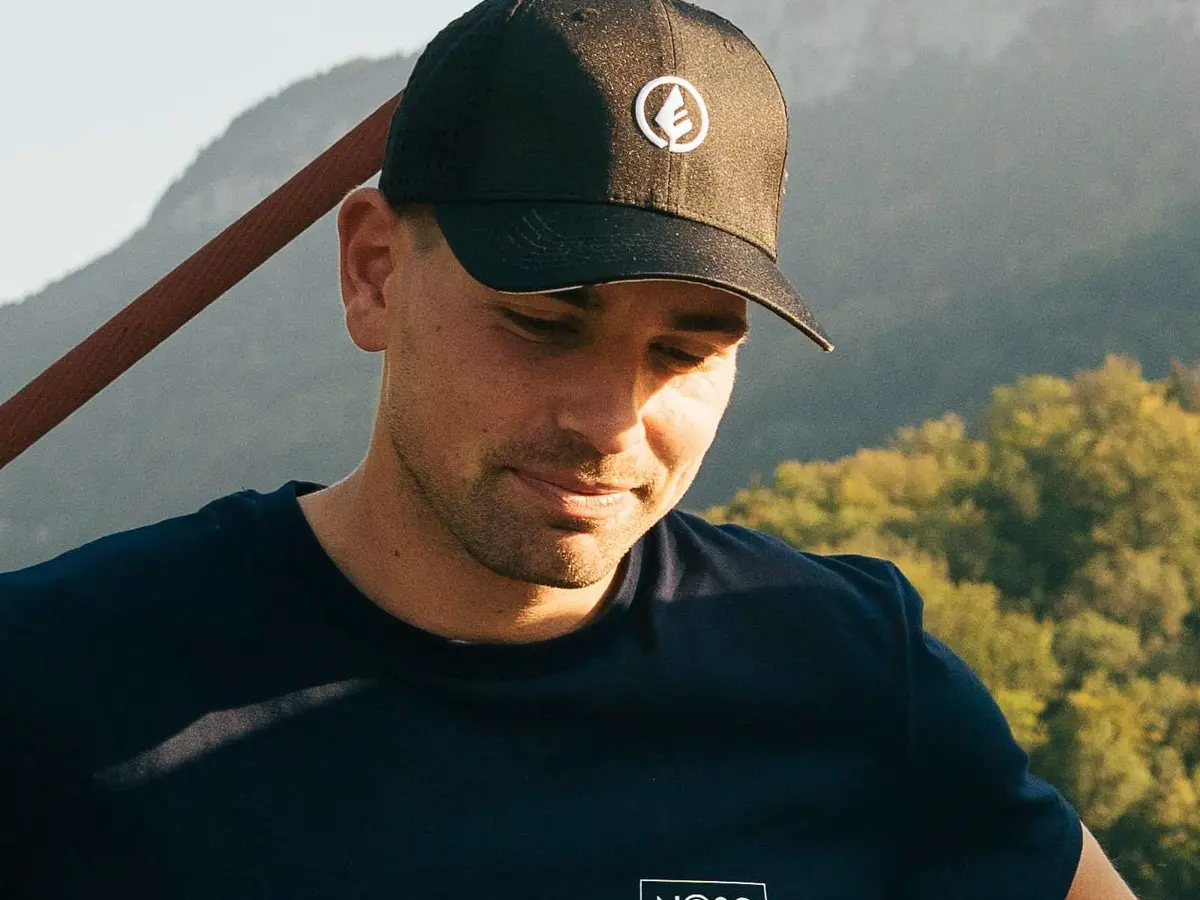
With a PhD in Environmental Sciences from the University of Lausanne, conservation ecology researcher Pierre-Louis Rey studies the links between biodiversity, ecosystem functioning and human societies. A qualified mountain leader, he combines scientific research, experience in remote environments and engagement with diverse audiences. Founder and President of La Ligne du Vivant, he oversees the expedition’s scientific direction and overall coordination.
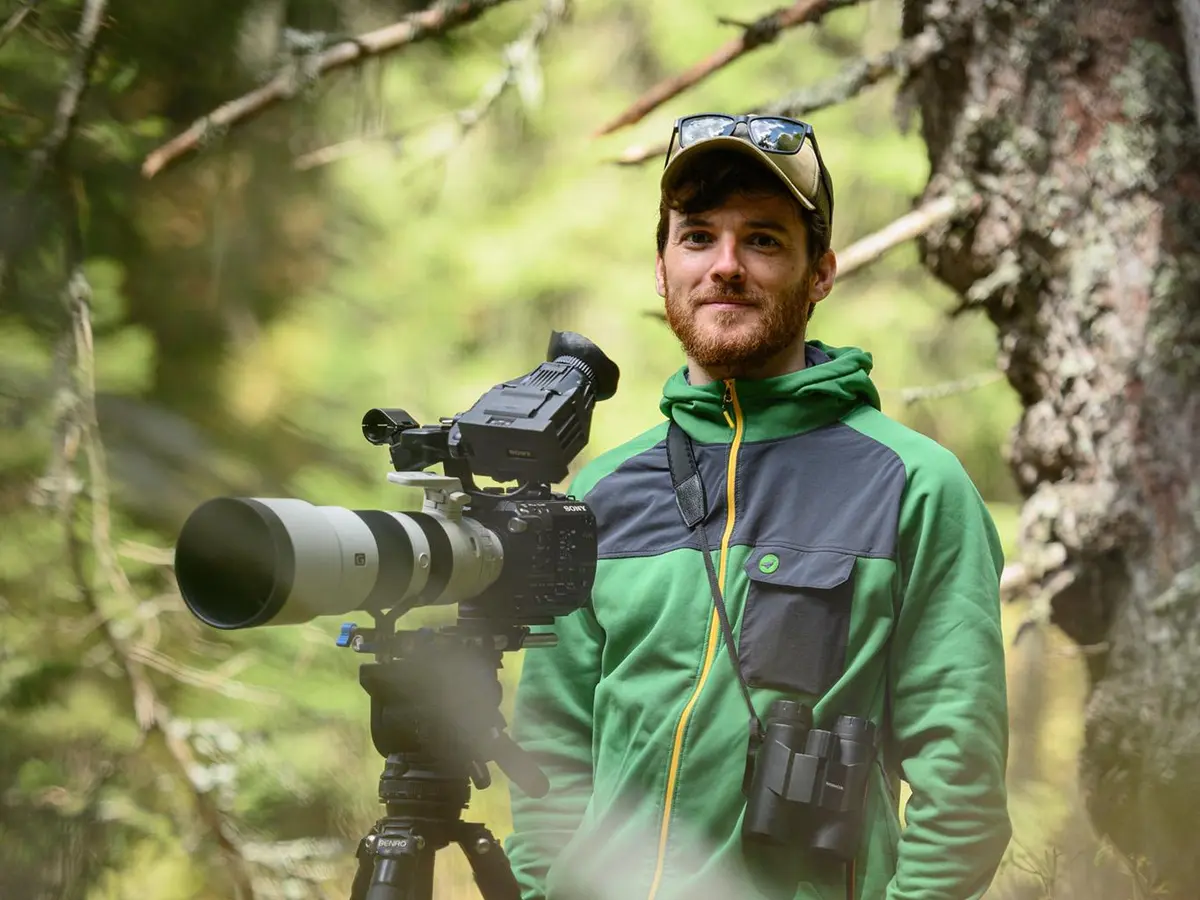
Director and producer with a bachelor’s degree in biology and ecology and a master’s degree from IFFCAM. His latest film, La Louve, which he co-directed, will receive a nationwide cinema release on 4 November 2026.
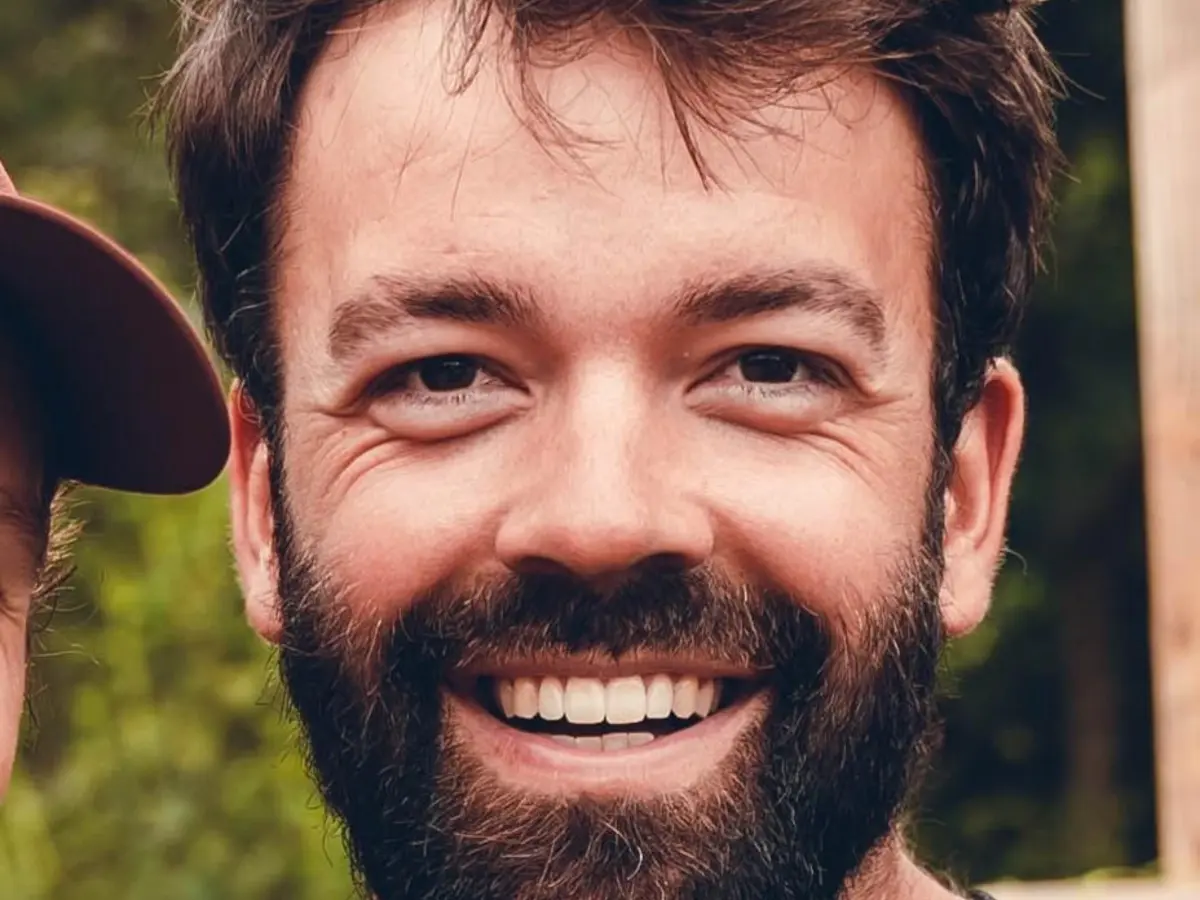
Director and cinematographer, trained in biology and ecology before completing the IFFCAM master’s programme. His footage has been broadcast on France 3 and ARTE, while his outdoor films have screened at numerous festivals.
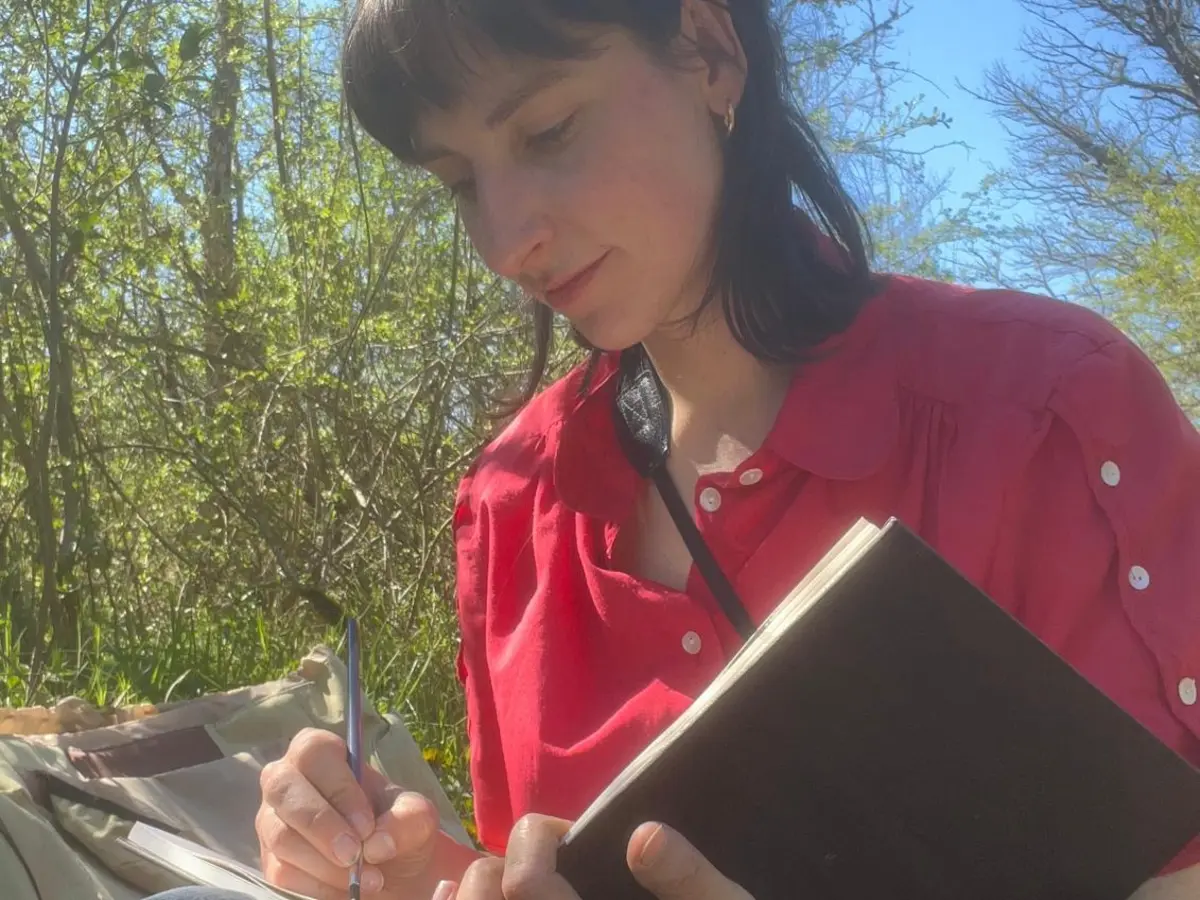
Independent artist and natural history illustrator with a master’s degree in ecology. She connects scientific knowledge with sensitive storytelling through watercolour, pencil and digital illustration.
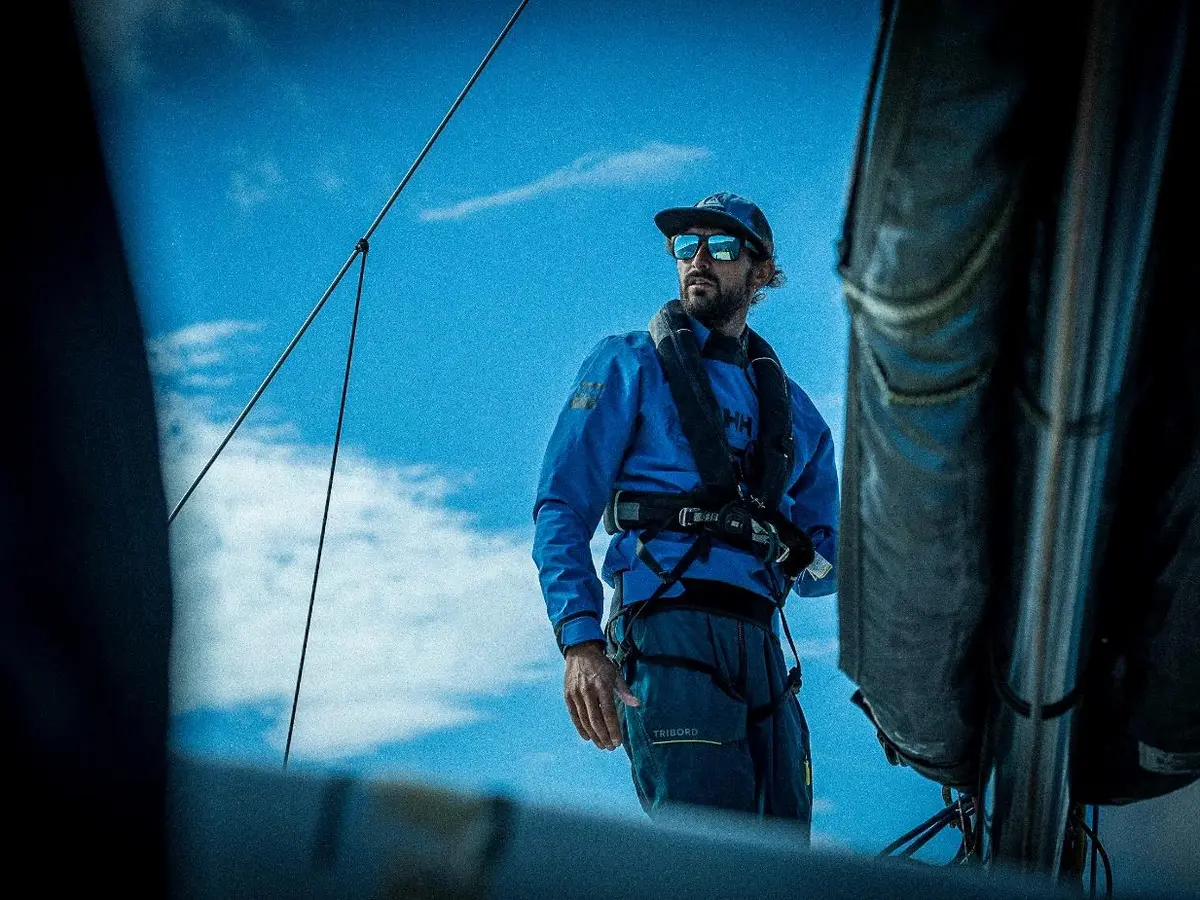
A Breton sailor and high-mountain guide, Éloi Devin combines racing experience, offshore sailing and expedition leadership. A state-qualified cruising instructor, he continues to navigate offshore and coastal waters aboard his one-design yacht, while leading sailing groups and preparing new expeditions.
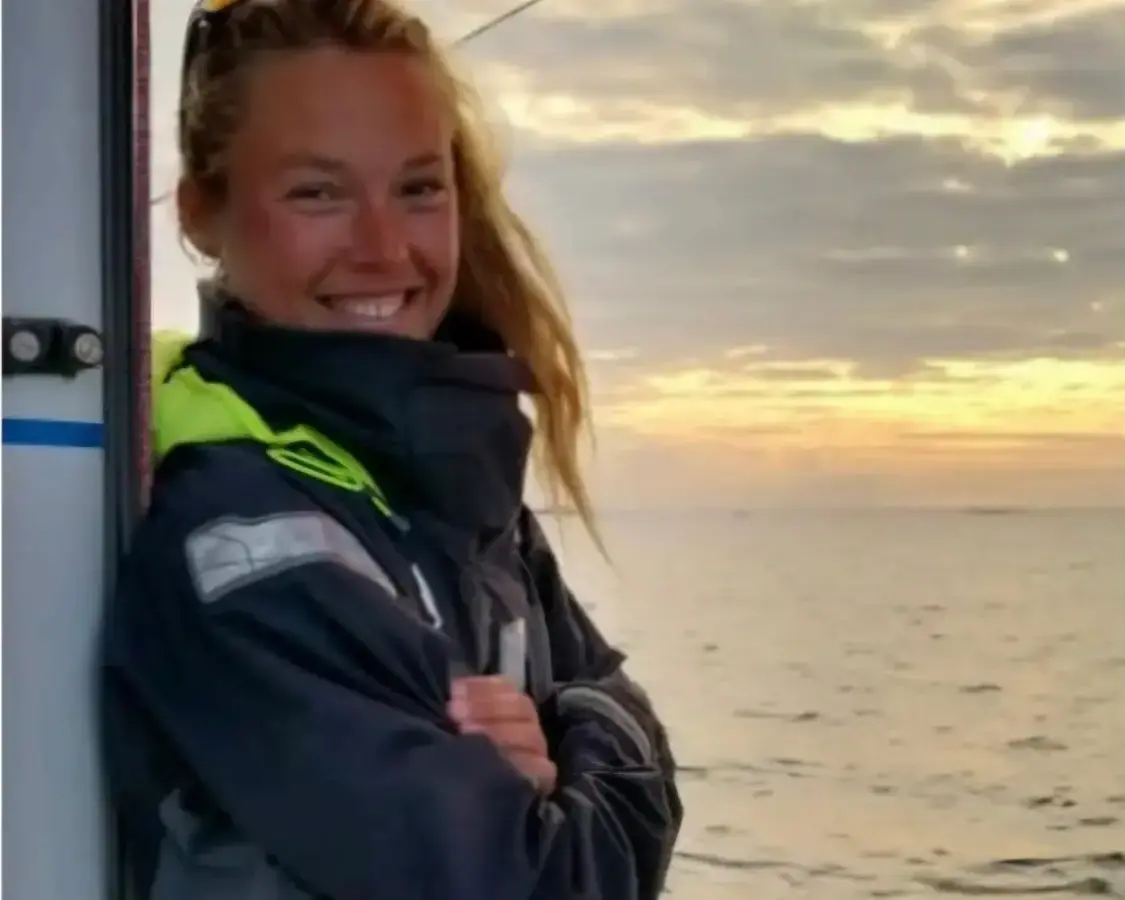
A professional sailor and skipper from a family of Breton seafarers, Vicky Pronier combines offshore racing, coaching and marine biology. After three solo seasons in the Mini 6.50 class, she now supports sailors and crews with cruising, training, deliveries, racing and skill development.
Partners
The project is seeking scientific, financial, technical and editorial partners who share the same commitment: to act and communicate with accuracy, clarity and sensitivity.
Complementary roles
Each organisation can contribute according to its resources, expertise and the issues it wishes to support. Collaborations are built around identified needs without diluting the project’s coherence.
Strengthen the case studies, protocols and links with researchers, NGOs and local stakeholders.
Contribute to sailing, mobility, logistics, safety or the team’s equipment.
Support the documentary, illustrated story, educational programme, publishing and public events.
Preparation status · 2 November 2026
We deliberately distinguish what is secured from what still needs to be formalised, discussed or funded. Partners will only be named publicly once their commitment has been confirmed.
Building a partnership
A partnership can support the expedition as a whole or meet a specific need. Its scope, timeline and resources are defined together from the first conversation.
Financial support, equipment, a service, expertise or skills to meet a concrete preparation or fieldwork need.
Scientific fieldwork, the documentary, the illustrated story, educational activities or a public event can receive dedicated support.
An ongoing relationship can combine preparation, meetings, scientific work, story production and public presentations.
Internal engagement
A partnership can also become a shared experience for your teams. Before, during and after the expedition, we can arrange meetings, provide progress updates and deliver a final presentation to share the project behind the scenes and make the links between biodiversity and societies tangible.
Partner reporting
For each collaboration, we provide reporting proportionate to the support committed and the component being supported.
The supported need, intended allocation, timeline and outputs are set out in writing.
Updates are shared at relevant stages of preparation, fieldwork and production.
The use of support and progress on the outputs are summarised in an accessible report.
A meeting, talk or screening can be developed with the partner where relevant.
Every collaboration will preserve La Ligne du Vivant’s scientific and editorial independence. No festival selection, minimum audience, exclusivity or distribution will be presented as secured before confirmation.
Contact
Would you like to support The Frontier of Life, host a public presentation, suggest a scientific collaboration or simply follow the adventure?
Legal information
Information identifying the organisation, publisher and technical service providers for this website. This translation is provided for convenience; the French version prevails.
Last updated · 2 October 2026La Ligne du Vivant non-profit organisation
Non-profit organisation governed by the French Law of 1 July 1901
11, chemin de champagne, Allement
01450 PONCIN · France
Pierre-Louis Rey
President of La Ligne du Vivant.
This website is published with ChatGPT Sites, a service of OpenAI Ireland Limited, 1st Floor, The Liffey Trust Centre, 117-126 Sheriff Street Upper, Dublin 1, D01 YC43, Ireland.
Distribution and technical hosting rely in particular on Cloudflare, Inc., 101 Townsend Street, San Francisco, CA 94107, United States · +1 650 319 8930.
Unless otherwise stated, the texts, visual identity and diagrams are the property of La Ligne du Vivant. Photographs, portraits, illustrations and technical documents remain the property of their respective authors and are used with their permission or under their licence.
Any substantial reproduction or reuse requires the prior consent of the rights holder.
The organisation endeavours to ensure the accuracy of the information published, but cannot guarantee that it is always complete or error-free. External links are provided for information; their content remains the responsibility of their publishers.
Privacy
A deliberately simple policy: collect little, explain clearly and retain only what is useful.
Last updated · 2 October 2026The data controller is La Ligne du Vivant, 11 chemin de Champagne, Allement, 01450 Poncin, France. For any questions or to exercise your rights: contact@laligneduvivant.fr.
Name, email address, subject and message content.
To respond to your request and follow up proposals relating to the expedition, partnerships, education or the press.
The organisation’s legitimate interest in responding to people who contact it and developing its activities.
Authorised members of the organisation. FormSubmit provides the technical transmission of the form.
Messages are retained for 12 months after the last exchange, then deleted.
When an exchange results in a partnership, relevant messages may be retained as evidence throughout the relationship and then for the applicable statutory limitation or archiving periods.
You may request access to, correction, deletion or restriction of your data, and object to its processing. Contact us at contact@laligneduvivant.fr.
You may also lodge a complaint with the French data protection authority: CNIL ↗︎.
The organisation uses no advertising cookies or marketing trackers. The HelloAsso module is loaded only when you choose to open the donation form. HelloAsso may then use cookies and technical data required for its operation, payment security and service measurement.
Donations are processed by HelloAsso and its payment providers. HelloAsso collects the information required for the transaction and donation follow-up. The organisation never has access to the donor’s full banking details.
The organisation neither sells nor rents your data. This policy will be updated before any newsletter, audience measurement or other data-collecting tool is added.